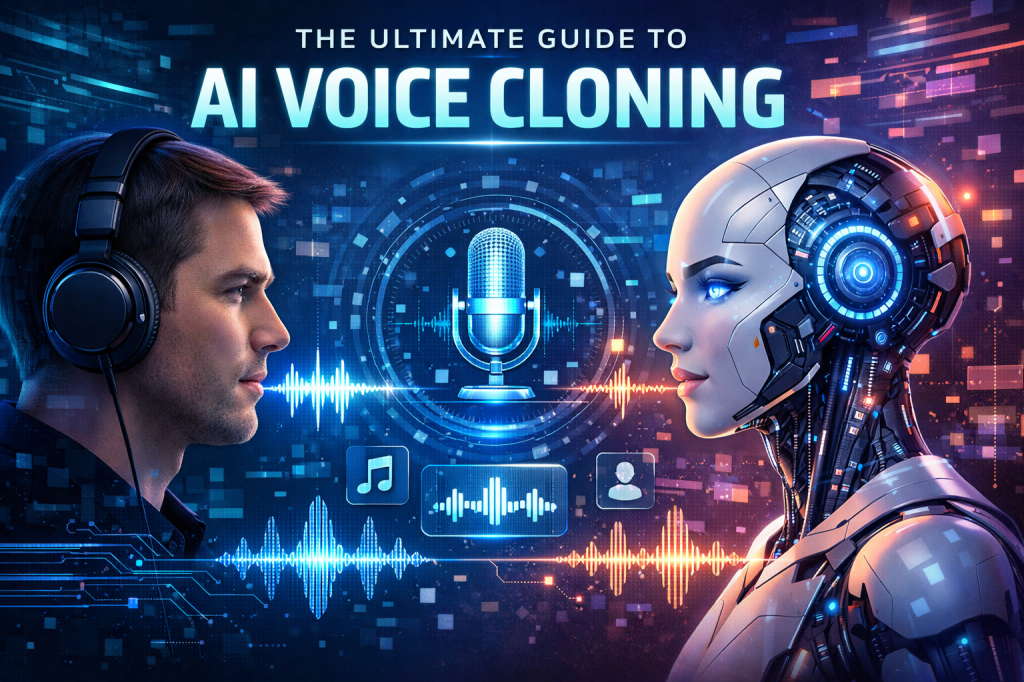
Artificial intelligence has transformed the way digital content is created, and one of the most fascinating innovations in this space is AI voice cloning. In 2026, voice cloning technology has advanced to a point where machines can replicate human speech with remarkable accuracy. From marketing campaigns to content creation, businesses and creators are using an AI voice cloning tool to produce natural, realistic voiceovers without repeatedly recording audio.
Voice technology is no longer limited to robotic narration or text-to-speech systems that sound mechanical. Modern AI models can mimic tone, accent, pacing, and emotional nuance. As a result, voice cloning is becoming a powerful tool for brands, marketers, podcasters, and video creators who need scalable and personalized audio content.
This guide explores how AI voice cloning works, why it is becoming essential in digital marketing and media production, and how businesses can use an AI voice cloning tool effectively in 2026.
What Is AI Voice Cloning?
AI voice cloning is a technology that uses machine learning to replicate a human voice. By analyzing voice recordings, an AI voice cloning tool learns patterns such as pronunciation, pitch, rhythm, and tone. Once the model is trained, it can generate new speech that sounds like the original speaker.
The most advanced voice cloning systems rely on deep learning models trained on massive datasets of human speech. These systems break down audio into smaller components and reconstruct them digitally, allowing the AI to generate entirely new sentences using the same voice profile.
Unlike traditional voice recording, where a person must record each line manually, AI voice cloning allows users to create new audio simply by typing text. The AI then produces speech that sounds as if the original speaker recorded it.
This ability to generate human-like speech at scale has opened up new possibilities in marketing, entertainment, education, and business communication.
Why AI Voice Cloning Is Growing Rapidly in 2026
The popularity of the AI voice cloning tool has grown rapidly because businesses need faster and more scalable content production. Voiceovers are used everywhere—from advertisements and product demos to online courses and explainer videos.
Traditionally, producing voiceovers required hiring voice actors, booking studio time, and coordinating multiple recording sessions. This process could be expensive and time-consuming, especially when content needed updates or translations.
AI voice cloning eliminates many of these challenges. Once a voice model is created, companies can generate new audio instantly without additional recording sessions.
Another factor driving adoption is the explosion of video content. Platforms like YouTube, TikTok, and Instagram require consistent content output, and voice narration is often a key component. An AI voice cloning tool allows creators to produce professional narration quickly, making it easier to scale content production.
How AI Voice Cloning Technology Works
Modern voice cloning technology relies on a combination of speech recognition, deep neural networks, and text-to-speech systems.
The process usually begins with collecting voice samples from a speaker. These recordings are used to train an AI model that analyzes vocal characteristics such as pitch, tone, and speaking style. The system learns how the speaker pronounces words and structures sentences.
Once the voice model is trained, users can input text into the AI voice cloning tool, and the AI generates speech that matches the trained voice.
Recent advancements in AI have improved the realism of these systems dramatically. Many voice cloning tools now support emotional tone, allowing users to generate speech that sounds excited, calm, persuasive, or conversational.
This level of control makes AI voice cloning particularly valuable for marketing, where tone and delivery can significantly impact audience engagement.
Key Benefits of Using an AI Voice Cloning Tool
One of the biggest advantages of voice cloning is efficiency. Businesses no longer need to record voiceovers repeatedly when scripts change. Instead, they can update the text and generate new audio instantly.
Another major benefit is consistency. When multiple voice actors are used across different campaigns, the brand voice may vary. An AI voice cloning tool ensures that the same voice tone and style are maintained across all content.
Cost savings also play a major role in adoption. Professional voice recordings can become expensive when producing large volumes of content. AI voice cloning significantly reduces these costs by eliminating repeated recording sessions.
Scalability is another important advantage. With voice cloning technology, companies can produce hundreds or thousands of voiceover variations quickly. This is especially useful for personalized marketing campaigns, where messages can be customized for different audiences.
Finally, voice cloning enables faster content production. Teams can create voiceovers instantly without waiting for recording sessions or editing processes.
Real-World Applications of AI Voice Cloning
The use of an AI voice cloning tool has expanded across multiple industries, with businesses finding innovative ways to integrate voice AI into their workflows.
Marketing and Advertising
Marketing teams often rely on voiceovers for promotional videos, product demos, and advertisements. AI voice cloning allows them to create voiceovers quickly and test multiple variations of marketing messages.
For example, brands can generate different ad versions with slight script changes to test which message resonates best with audiences.
Video Content Creation
Content creators on platforms like YouTube and TikTok are increasingly using voice cloning tools to generate narration. This allows them to produce videos faster while maintaining consistent audio quality.
Instead of recording voiceovers repeatedly, creators can simply update scripts and generate new audio.
E-Learning and Online Courses
Educational platforms are using AI voice cloning to produce lectures and tutorials. An AI voice cloning tool allows instructors to update course content without re-recording entire lessons.
This flexibility is especially valuable in fast-changing industries where information needs to be updated frequently.
Podcasts and Audio Content
Podcast creators can use voice cloning to generate intros, narration, or additional content segments. Some creators even use voice cloning to simulate multiple speakers in storytelling podcasts.
Customer Support and Virtual Assistants
Voice cloning technology is also being used in conversational AI systems. Virtual assistants can deliver responses using natural-sounding voices, creating more engaging user experiences.
AI Voice Cloning and the Rise of Video Marketing
One of the most interesting developments in 2026 is the integration of voice cloning with AI video generation tools.
Platforms like Tagshop AI allow marketers to create video ads with automated scripts, visuals, and voiceovers. The system uses advanced models like Kling 3.0 and Veo 3 for video generation, while its Nano Banana model handles image generation.
When combined with an AI voice cloning tool, these platforms allow marketers to create complete video advertisements quickly. A simple product image can be transformed into a fully narrated promotional video without filming or recording audio.
This combination of AI technologies is significantly reducing production time for marketing teams.
Ethical Considerations of Voice Cloning
While AI voice cloning offers many benefits, it also raises ethical concerns. The ability to replicate someone’s voice raises questions about consent and misuse.
Responsible voice cloning tools include safeguards to ensure that voices are only cloned with permission from the speaker. Many platforms require voice owners to verify their identity before creating a voice model.
Businesses using an AI voice cloning tool should prioritize transparency and ethical use. Clear policies and consent mechanisms are essential to prevent misuse of the technology.
The Future of AI Voice Cloning
The future of voice cloning technology looks promising. AI researchers are continuously improving voice realism, emotional expression, and multilingual capabilities.
Future AI voice cloning tools are expected to support:
More natural emotional tone and expression
Real-time voice generation for live conversations
Multilingual voice cloning with accurate accents
Integration with virtual reality and immersive experiences
As these capabilities improve, voice cloning will likely become a standard component of digital content creation.
Choosing the Right AI Voice Cloning Tool
When selecting an AI voice cloning tool, businesses should consider several factors. Voice quality is one of the most important aspects. The generated speech should sound natural and human-like.
Customization options are also important. Some tools allow users to adjust tone, speed, and emotion to match the intended message.
Integration with other creative tools is another valuable feature. Platforms that combine voice cloning with video and image generation can streamline the entire content creation process.
Finally, ease of use is crucial. The best tools provide intuitive interfaces that allow users to generate voiceovers quickly without technical expertise.
Read more : My Experience Using AI Video Ads Generators for Paid Ads
Final Thoughts
AI voice cloning has become one of the most exciting advancements in artificial intelligence. The ability to replicate human voices with remarkable accuracy is transforming content creation, marketing, and digital communication.
In 2026, an AI voice cloning tool is no longer just a novelty. It is a practical solution for businesses and creators who need scalable, high-quality audio production.
From marketing videos to online education and customer engagement, voice cloning technology is enabling new forms of communication that were previously impossible.
As AI models continue to evolve, the line between human and machine-generated speech will become even harder to distinguish. Businesses that embrace voice cloning responsibly and creatively will have a significant advantage in the rapidly evolving digital landscape.
 AI Avatar Tech Blog
Leave a comment