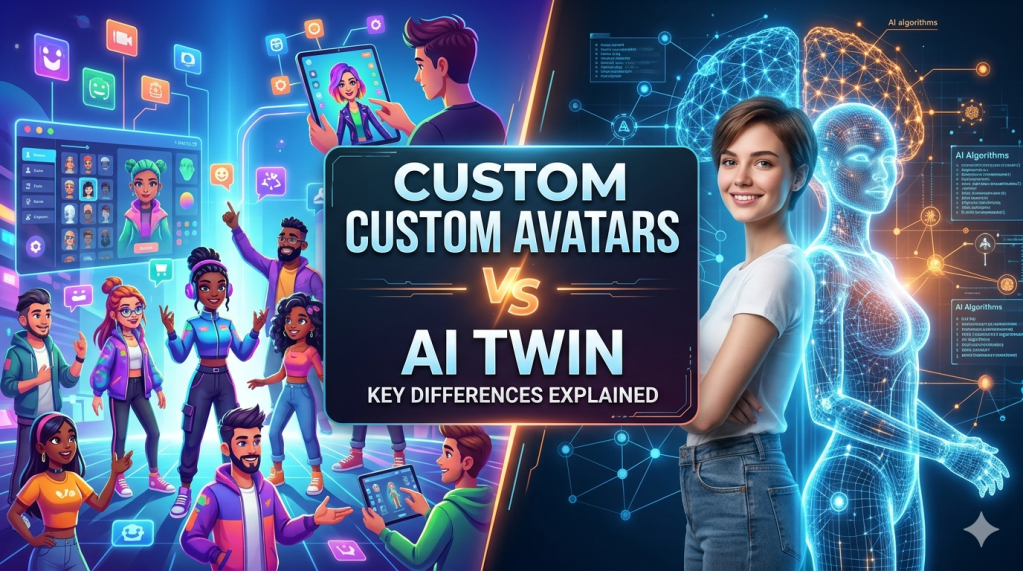
Custom Avatars vs AI Twin is one of the most popular subjects among creators, marketers, and tech enthusiasts in the modern fast-paced digital ecosystem. With the continued redefining of the way we present ourselves online by artificial intelligence, it is important to know the difference between the two concepts. Be it in the creation of a personal brand, the generation of content, or even in the context of automation, understanding the difference between custom avatars and AI twins can help you make smarter choices.
This guide simplifies all that in a simple, practical, and experience-based manner, and you are assured to select what suits you in terms of your goals.
What Are Custom Avatars?
Custom avatars are computer-based images of an individual, company, or character that can be created to a certain degree of realism. Depending on the tool and the purpose, they may be animated, stylized, or hyper-realistic.
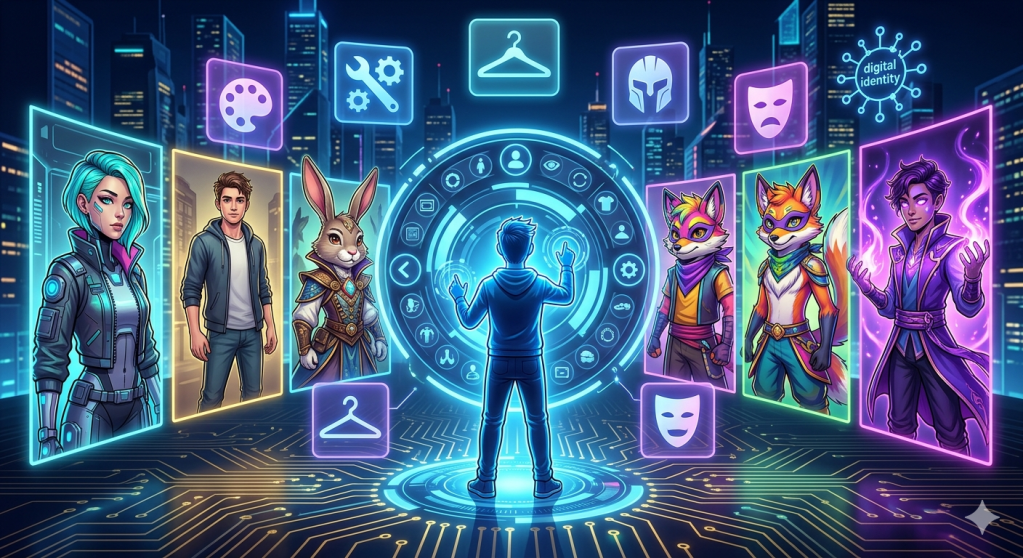
In my experience, custom avatars are popular in:
- Social media content
- YouTube videos
- Branding and marketing images.
- Virtual environments and gaming.
The most important of all is control; you can design them in the way you desire.
Key Characteristics of Custom Avatars
- Either cartoonish or realistic.
- Minimal input (images or prompts) is required.
- Extremely personalized look.
- Pay attention primarily to visuals and not behavior.
Read More About: What is a custom avatar guide
What Is an AI Twin?
The AI twin is a very sophisticated computer simulation of a real human being. It transcends images and tries to imitate voice, character, behavior, and even the pattern of decision-making.
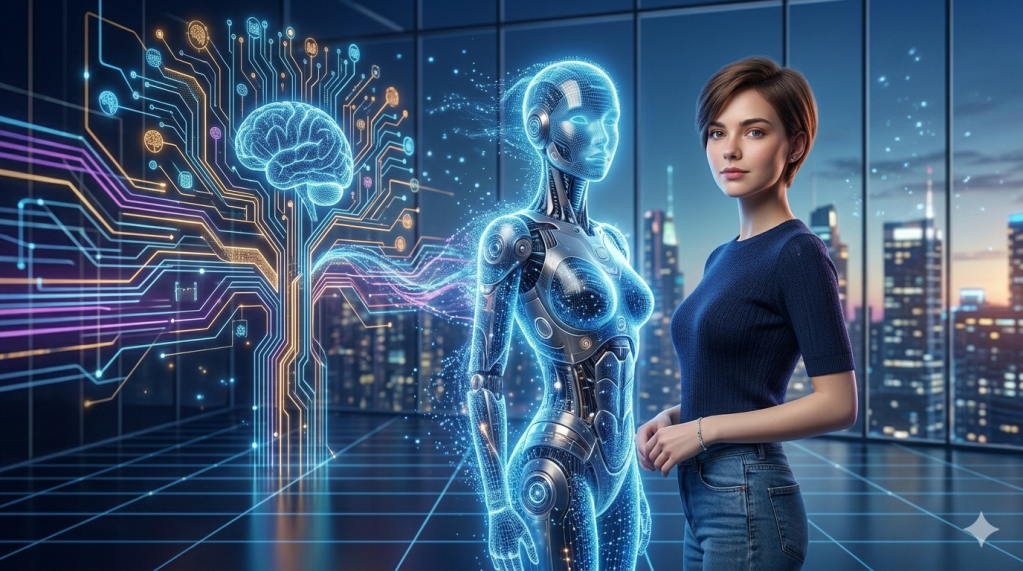
AI twins are trained on large datasets, unlike custom avatars, which include:
- Voice recordings
- Video footage
- Writing samples
- Behavioral data
Key Characteristics of AI Twins
- Very life-like and very human.
- Able to communicate independently.
- Imitates character and demeanor.
- Needs a lot of information to train.
Custom Avatars Vs AI Twin: Core Differences
In the comparison of Custom Avatars vs AI Twin, the difference is in depth, complexity, and use case.
1. Realism Level
Custom avatars may be realistic, yet they are still representations. In contrast, AI twins are expected to imitate a real person to an almost perfect degree.
2. Functionality
Mostly, visual tools are custom avatars. AI twins are smart and communicative devices.
3. Data Requirements
Basic inputs, such as images, are required in custom avatars. AI twins need enormous data to be effective.
4. Use Cases
- Custom avatars: Branding, content creation.
- AI twins: Business scaling, personal assistants, automation.
5. Control
You are in charge of personal avatars. There is a possibility that AI twins can behave autonomously, and this can be both an opportunity and a threat.
My experience with Custom Avatars and AI twins.
Practically, I have worked with both custom avatars and AI-based systems in content workflows.
Custom avatars are very easy to implement. It is possible to create a digital persona and begin generating content within minutes. They are ideal in terms of speed and flexibility.
AI twins, on the other hand, are another game. Their establishment takes time, statistics, and technical knowledge. However, when they are ready, they can automate such tasks as:
- Responding to queries
- Developing customized content.
- Being a virtual assistant.
Custom avatars are preferable in case you are a beginner. AI twins are more rational when scaling operations.
Benefits of Custom Avatars
1. Easy to Create
The simplicity of creating custom avatars is one of the greatest benefits of this type of avatar. You do not have to have any technical skills, code, or data. The majority of tools do not need many inputs, such as pictures, text prompts, or simple customization settings. This renders custom avatars available even to novices who are only beginning with digital content creation.
2. Cost-Effective
Custom avatars are generally affordable as opposed to more sophisticated AI solutions. A large number of platforms have free plans or cheaper subscriptions, which is why they are suitable for individuals, small businesses, and startups. You will not need to spend a lot of money on costly software, production teams, and equipment to produce high-quality visual content.
3. Flexible Design
Using custom avatars, you can have all the creative freedom. You have the liberty to create avatars in any fashion, be it a cartoonish look, a semi-realistic appearance, or a very realistic digital human form. This is because you can align your avatars with your brand identity, target audience, or content style and make your visuals more distinct and interesting.
4. Quick Deployment
Fast-paced workflows are best suited to custom avatars. Having been created, they can be immediately applied to videos, social media posts, presentations, or marketing campaigns. It does not have a lengthy setup process, and so you can create and publish content in a short time span, a crucial consideration in the current content-driven world where time is of the essence.
Benefits of AI Twins
1. Advanced Automation
AI twins are capable of solving tasks on their own, e.g., replying to messages, content creation, or workflow management. This saves the manual effort as well as enables the processes to run efficiently in the background.
2. Human-Like Interaction
They are made to talk in a natural, conversational manner. This makes the interactions more personal and engaging, particularly with customer support, content delivery, and user engagement.
3. Personal Branding at Scale
In the case of AI twins, you will be able to be present on several platforms simultaneously. It is as though you had a digital representation of yourself working 24/7, which assisted you in keeping active and regular online.
4. Time-Saving
AI twins can save your time by automating time-consuming and repetitive activities. This will enable you to concentrate more on strategy, creativity, and high-value work rather than routine work.
Top Tools for Custom Avatars and AI Twins
Some of the most useful tools that I have personally researched or studied thoroughly are listed below.
1. Tagshop AI
Tagshop AI is an effective AI video-making app that allows you to make realistic custom avatars and AI twins in one app. It is easy to create a digital representation of content or go a notch higher and create a realistic version of yourself with voice and personality features.
In my experience, the best thing about this tool is its flexibility: it can be used to create fast and avatar-based videos, and, at the same time, you can always expand to more complex and human-like AI-based content. This renders it a good option to both novices and marketers who want to make interesting and personalized videos without wasting time.
Key Features:
- AI-powered video generation
- Creation of custom avatars that are realistic.
- AI twin (digital human) ability.
- Human-like output voice cloning.
- Social media optimization
- Easy drag-and-drop interface
Pros:
- Both avatars and AI twins.
- Very realistic video output.
- Very easy to use
- Excellent for marketers and creators.
- Scalable and fast content creation.
Cons:
- The free version has a small number of credits only.
Best For:
performance marketers, Brands, Businesses, e-commerce & Dropshipper, App & SaaS Companies, and Content Creators.
Read More About: Tagshop AI Review
2. Synthesia IO
One of the most used AI video generation tools is Synthesia IO, which is characterized by realistic avatars and professional results. It enables one to produce high-quality videos using simple text scripts without the use of cameras, actors, or studios. This renders it an ideal option among businesses, educators, and corporate teams.
Key Features:
- Realistic AI avatars
- Multi-language support
- Script-based video creation
- Voice cloning
Pros:
- Professional-grade output
- Time-saving
- Easy interface
- Global language support
- Scalable content creation
Cons:
- Limited personality depth
- Subscription cost
Best For:
Training of the corporations and explanatory videos.
Read More About: Synthesia IO
3. Replika
Replika is an AI-based application that is more of an AI twin since it is more conversational and personality-oriented. It is meant to behave like a human being and learns as the user behaves. Although it is not that much visually oriented, it is very good at creating emotional and conversational relationships.
Key Features:
- AI chatbot personality
- Memory-based conversations
- Voice interaction
- Emotional learning
Pros:
- Highly interactive
- Learns over time
- Personalized experience
- Engaging conversations
- Mobile-friendly
Cons:
- Not visually advanced
- Minimal professional applications.
Best For:
Personal AI companion
4. Hour One
Hour One is a video AI platform that is business-oriented and allows users to make professional videos using realistic AI speakers. It is created in the case of organizations that desire to create high-quality content on a large scale. The platform can be specifically used in training, marketing, and internal communications.
Key Features:
- AI presenters
- Script-to-video conversion
- Custom branding
- Cloud-based platform
Pros:
- Professional avatars
- Business-focused
- Easy workflow
- Scalable production
- Good support
Cons:
- Limited AI twin capability
- Pricing can be high
Best For:
Business video production
5. DeepBrain AI
DeepBrain AI provides solutions of AI humans that are advanced and fill the gap between custom avatars and AI twins. It is involved in the provision of hyper-realistic digital humans that can interact and communicate. The tool is better applied to businesses that seek the latest AI experiences and automation.
Key Features:
- Hyper-realistic avatars
- AI human interaction
- Voice synthesis
- API integration
Pros:
- Very realistic output
- Advanced features
- Enterprise-ready
- Scalable
- Strong AI capabilities
Cons:
- Complex setup
- Expensive
Best For:
Enterprise-level AI humans
Read More About: DeepBrain AI
6. HeyGen
HeyGen is a rapidly expanding AI video platform that simplifies and makes it easy to create avatars. It offers a variety of templates and personalization, enabling users to create videos fast on social media, marketing, and personal branding. It is particularly popular among creators and small businesses because of its ease of use.
Key Features:
- AI avatar videos
- Voice cloning
- Templates
- Easy editing tools
Pros:
- Beginner-friendly
- Fast rendering
- Good quality
- Affordable plans
- Flexible templates
Cons:
- Limited AI twin features
- Less behavioral depth
Best For:
Influencers and creators of content.
Read More About: HeyGen
Custom Avatars Vs AI Twin: Table of Comparison.
| Aspect | Custom Avatars | AI Twin |
| Definition | A computerized image used to visually represent an individual, brand, or character. | An advanced AI-based simulator that replicates a real person’s appearance, voice, and behavior. |
| Realism Level | Can be cartoon-like, semi-realistic, or fully realistic. | Highly realistic, often close to a real human in both appearance and communication. |
| Functionality | Mainly visual—used for videos, branding, and content creation. | Interactive and intelligent—can communicate, respond, and perform tasks independently. |
| Data Requirement | Requires minimal input, such as images, templates, or prompts. | Requires large datasets including voice recordings, videos, and behavioral data. |
| Ease of Use | Easy to create and beginner-friendly. | A complex setup that may require technical expertise and training data. |
| Customization | High visual customization (style, design, appearance). | Limited visual customization but deep personalization in behavior and communication. |
| Cost | Generally low to medium cost, with many affordable tools available. | Higher cost due to advanced AI training and infrastructure. |
| Control | Full control over design and usage. | Partial control, as AI behavior depends on training data. |
| Use Cases | Social media content, marketing, branding, videos, and entertainment. | Customer support, automation, personal assistants, and scalable digital presence. |
| Speed of Creation | Quick to create and deploy within minutes. | Time-consuming due to data training and system configuration. |
| Scalability | Good for content production but requires manual effort. | Highly scalable—can operate across multiple platforms simultaneously. |
| Best For | Marketers, influencers, and creators need fast visual content. | Businesses and professionals are seeking automation and advanced AI interaction. |
Expert Opinion
Regarding the industry, there is a consensus among experts that the two technologies are used at various levels of digital transformation.
The custom avatars are regarded as the gateway to AI-driven identity. They are not complicated, convenient, and can be used by the majority of creators.
However, AI twins are the future of personal automation. With more sophisticated machine learning models, AI twins will probably become more widespread in:
- Customer support
- Personal branding
- Virtual influencers
As I have observed, those businesses that embraced a hybrid model, i.e., both custom avatars and AI twins, were the ones that would receive the greatest value.
When Should You Choose Custom Avatars?
Go for custom avatars if:
- You require fast content development.
- You desire complete creative control.
- You’re working on branding
- You have a limited budget
When Should You Choose an AI Twin?
Choose an AI twin if:
- You want automation
- You need scalability
- You are creating a digital assistant.
- Training data is available to you.
Future of Custom Avatars and AI Twins
The future of Custom Avatars vs AI Twin is very bright.
The custom avatars will keep on developing with:
- Better realism
- Real-time animation
- Integration with AR/VR
The AI twins will tend to trend towards:
- Complete copying of personality.
- Autonomous decision-making
- Business integration
The distinction between the two can eventually be obscured, but, at this point, they are used differently.
FAQs
1. What is the difference between custom avatars and AI twins?
Custom avatars are visual digital representations, while AI twins are advanced replicas that mimic a person’s voice, behavior, and interactions.
2. Which is better: custom avatars or AI twins?
It depends on your goal. Custom avatars are better for content creation, while AI twins are ideal for automation and advanced interaction.
3. Can I create an AI twin without technical knowledge?
Creating a basic version is possible with some tools, but a fully functional AI twin usually requires data, setup, and technical understanding.
4. Are custom avatars suitable for beginners?
Yes, custom avatars are beginner-friendly and can be created easily using simple tools without prior experience.
5. How much does it cost to create an AI twin?
AI twins are generally more expensive due to the need for data training, advanced AI models, and infrastructure.
6. Do AI twins really behave like real humans?
AI twins can simulate human-like responses and communication, but they are not perfect and still depend on training data.
7. Can custom avatars talk like real humans?
Yes, many tools allow avatars to speak using AI-generated voices, but they usually lack deep personality and behavioral intelligence.
8. What are the main use cases of AI twins?
AI twins are used in customer support, virtual assistants, personal branding, and business automation.
9. Are AI twins safe to use?
They are generally safe if used responsibly, but privacy and data security should always be considered when creating one.
10. Can I use both custom avatars and AI twins together?
Yes, combining both can be very effective—custom avatars for visual content and AI twins for automation and interaction.
Conclusion
The Custom Avatars vs AI Twin is a concept that one must understand in the current world, which is dominated by AI. The two technologies have distinct benefits, and the correct decision is one that is based on your objectives.
In case you are in a hurry, creative, and simple, go with custom avatars.
In case you want to go into automation, scalable, and realistic AI twins are the future.
In my case, it is most intelligent to begin with custom avatars and slowly explore AI twins.
 AI Avatar Tech Blog
Leave a comment