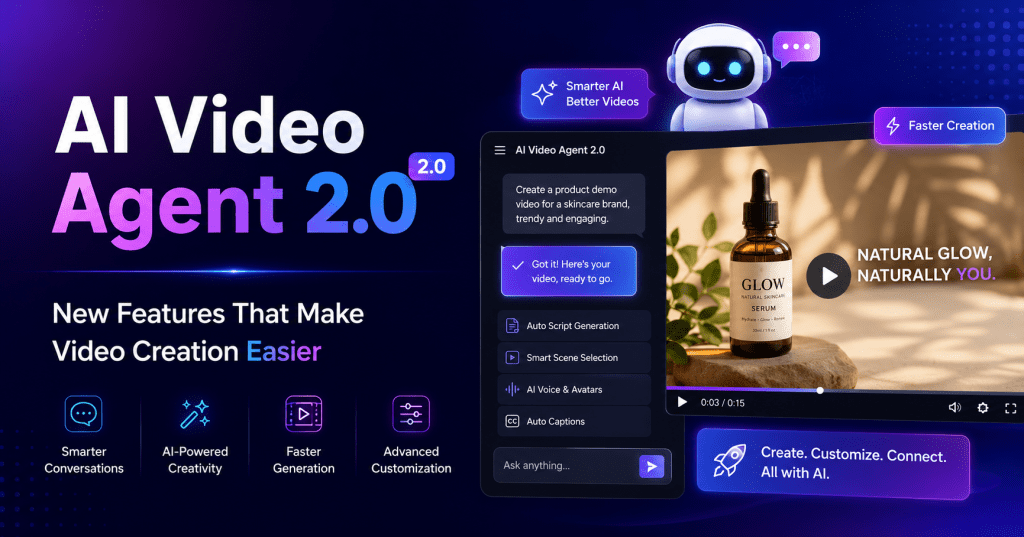
Video content has become the backbone of modern digital marketing. Whether you’re running an eCommerce store, launching a SaaS product, promoting a mobile app, or building a personal brand, video is often the fastest way to capture attention and drive engagement. Platforms like TikTok, Instagram Reels, YouTube Shorts, Facebook, and even LinkedIn are prioritizing video content, making it essential for brands that want to stay competitive.
However, despite the growing demand for video, creating high-quality content remains a challenge for many businesses. Traditional video production often requires multiple tools, creative resources, editing expertise, and significant time investment. Even with the rise of AI video generators, many solutions still require users to write detailed prompts and repeatedly regenerate videos until they get acceptable results.
This is where AI Video Agent 2.0 changes everything.
Rather than acting as a simple text-to-video tool, AI Video Agent 2.0 functions as a creative partner that understands your goals, asks intelligent questions, builds structured storyboards, and helps create videos that are ready for real-world marketing campaigns. The latest version introduces several powerful upgrades that make video creation more intuitive, collaborative, and efficient than ever before.
In this guide, we’ll explore the latest features of AI Video Agent 2.0, how it works inside Tagshop AI, and why it’s becoming one of the most exciting advancements in AI-powered video creation.
What Is AI Video Agent 2.0?
AI Video Agent 2.0 is an advanced AI-powered video creation assistant designed to simplify every stage of the video production process. Instead of forcing users to learn complex editing software or spend hours creating scripts and storyboards manually, the AI Agent guides them through the entire workflow using a conversational interface.
Think of it as having a creative strategist, scriptwriter, storyboard artist, and video producer available on demand. Users simply describe what they want to create, and the Agent transforms that idea into a structured video plan. It asks follow-up questions, understands marketing goals, organizes content into scenes, and helps refine the creative direction before video generation begins.
This approach solves one of the biggest limitations of traditional AI video generators. Rather than generating a complete video immediately, AI Video Agent 2.0 takes time to understand context and build a stronger creative foundation. The result is higher-quality videos that align more closely with business goals and audience expectations.
For marketers and brands that need to produce content consistently, this level of automation can dramatically reduce production time while improving overall video quality.
Why Traditional Video Creation Still Slows Teams Down
Despite major advancements in video technology, many businesses still struggle to produce content at scale. The problem isn’t a lack of ideas—it’s the complexity of execution.
Traditional video production often involves multiple stages, including scripting, concept development, filming, editing, revisions, voiceovers, graphics, and publishing. Each stage may require different tools or specialists, creating bottlenecks that slow down the entire process.
For example, a marketing team might spend several days planning a campaign, another week creating video assets, and additional time reviewing and revising the content. By the time the video is ready, the opportunity to capitalize on a trend or product launch may already be gone.
Even many AI video tools introduce new challenges. Users often need to write highly detailed prompts and regenerate content repeatedly to get acceptable results. Small changes can require generating an entirely new video, which wastes time and credits.
AI Video Agent 2.0 was built specifically to eliminate these challenges by creating a more collaborative and intelligent workflow.
What’s New in AI Video Agent 2.0?
The latest version introduces several major upgrades that make video creation significantly easier and more effective.
1. Conversational Video Creation
One of the most important improvements is the ability to create videos through natural conversation.
Instead of filling out complicated forms or writing lengthy prompts, users can simply explain their idea the same way they would describe it to a colleague or creative team member. The AI understands rough concepts and helps transform them into complete marketing videos.
For example, a user might type:
“Turn my bestseller clothing piece into a TikTok ad with a before-and-after transformation.”
That’s enough for the AI Agent to start building a creative direction.
This conversational workflow removes the intimidation factor often associated with AI tools. Users no longer need technical expertise or prompt engineering skills to create compelling video content.
2. Smarter Product Understanding
Another major enhancement is the Agent’s ability to understand products automatically.
Rather than manually entering product information every time a new video is created, users can simply provide a product URL. The system then analyzes the page and gathers important details such as product descriptions, images, benefits, and visual assets.
This automation significantly reduces setup time and ensures that the AI has accurate information to work with.
For eCommerce businesses managing large product catalogs, this feature can save countless hours each month. Instead of uploading assets repeatedly, teams can focus on refining creative strategy and launching campaigns faster.
3. Intelligent Follow-Up Questions
A common problem with traditional AI generators is that they often lack context. They receive a prompt and generate content without understanding the larger marketing objective.
AI Video Agent 2.0 solves this problem by asking intelligent follow-up questions.
After receiving an idea, the Agent may ask:
- Who is the target audience?
- What tone should the video use?
- Which voiceover style fits your brand?
- What problem does the product solve?
- What action should viewers take?
These questions allow the AI to gather important strategic information before creating content.
Rather than guessing what users want, the Agent collaborates with them to build a stronger campaign foundation. This often leads to more persuasive messaging, better storytelling, and improved marketing performance.
4. Scene-by-Scene Storyboarding
One of the biggest innovations in AI Video Agent 2.0 is its storyboard-first workflow.
Traditional AI tools typically generate a complete video immediately after receiving a prompt. While this may seem efficient, it often results in videos that lack structure or strategic flow.
AI Video Agent 2.0 takes a different approach.
Before generating any scenes, the Agent creates a storyboard that outlines the entire video. Users can see how the narrative unfolds, understand the purpose of each scene, and review the overall messaging before production begins.
This process helps ensure that the final video aligns with business objectives and audience expectations.
By reviewing the storyboard first, marketers gain far more control over the creative direction and avoid wasting time on unnecessary revisions later.
5. Scene-Level Editing
One of the most frustrating aspects of traditional AI video generation is having to regenerate an entire video because one scene isn’t working.
AI Video Agent 2.0 eliminates this problem through scene-level editing.
Users can review each scene individually and provide targeted feedback such as:
- Make Scene 1 more attention-grabbing
- Add stronger social proof in Scene 3
- Focus more on product benefits
- Remove the lifestyle shot
The Agent updates only the selected scene while keeping the rest of the video intact.
This level of precision dramatically improves workflow efficiency and gives marketers more creative control over the final output.
6. Longer Video Support
Many AI tools focus primarily on short clips, limiting creative possibilities.
AI Video Agent 2.0 supports videos ranging from 4 seconds to 60 seconds, allowing users to create more complete stories and marketing campaigns.
Longer videos provide room for:
- Stronger hooks
- Better storytelling
- Product demonstrations
- Customer testimonials
- Detailed explanations
- More persuasive calls-to-action
This flexibility makes the platform suitable for a wider range of marketing use cases.
7. Better AI Models
The latest version includes support for advanced video generation models designed to produce more realistic visuals and smoother scene transitions.
The Agent automatically selects the most capable model available, ensuring that users always benefit from the latest improvements in AI technology.
For advanced users who want more control, manual model selection is also available.
This balance between automation and flexibility makes the platform accessible to beginners while still providing power-user capabilities.
How to Use AI Video Agent 2.0 in Tagshop AI
Tagshop AI has integrated AI Video Agent 2.0 directly into its platform, making video creation simple and intuitive.
Let’s walk through the complete process.
Step 1: Log in to TagShop AI
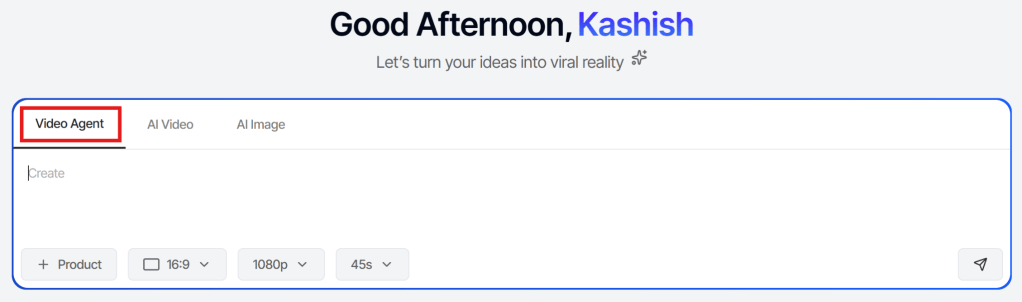
Head to your dashboard. You will see a dialogue box on the home page; yes, that’s Tagshop AI’s AI Video Agent.
Step 2: Type Your Idea
Don’t overthink this part. Something like “Turn my bestseller clothing piece into a TikTok ad with a before-and-after” is plenty. The Agent is built to work with rough ideas; that’s the whole point, and now it has the room to build them into a full story instead of a single clip.

Step 3: Add Your Product
Click Add Product and choose how you want to bring it in.

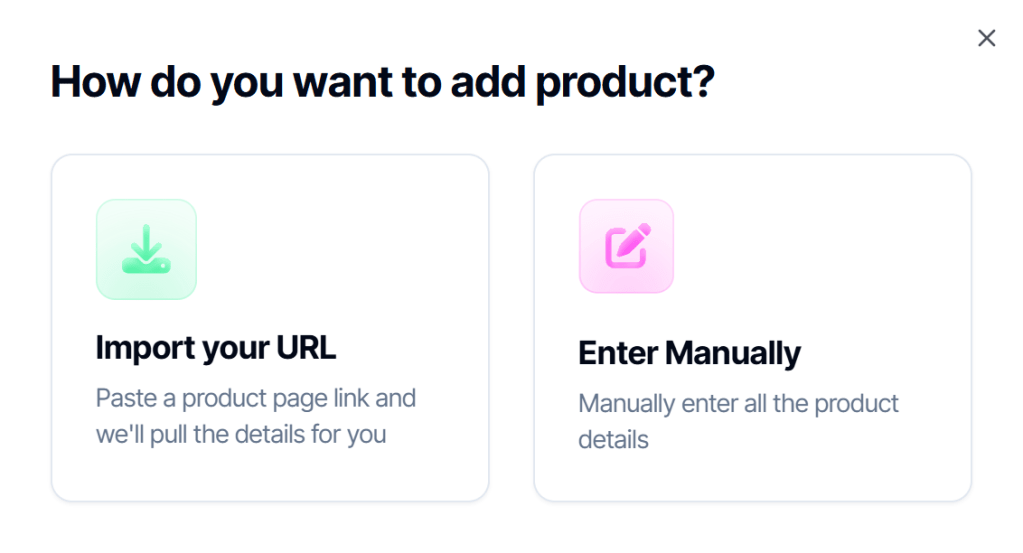
From a URL: paste your product link and TagShop AI fetches the description and images automatically. Pick the ones you want, check everything looks right, and save. Done in under a minute.
Manually: no link? Just fill in the product name, category, description, and upload your media. Simple form, nothing you haven’t done before.
Step 4: Set Your Format
Pick your aspect ratio and resolution, then drag the duration slider anywhere from 4 seconds up to 60, so there’s room for an actual opening, middle, and payoff.
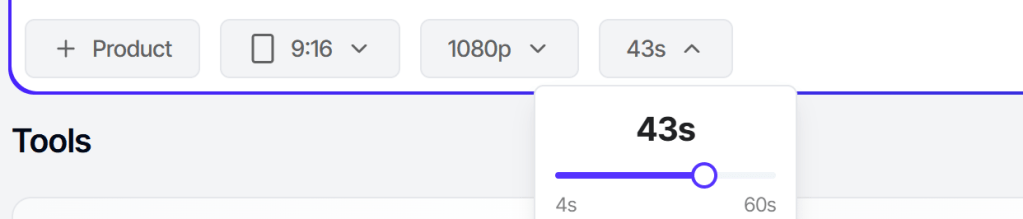
You’ll also see a model selector. The Agent defaults to the newest model available, so you don’t have to think about it, but if you want to pick a specific one yourself, that option’s right there too.
Step 5: Send It and Let the Agent Ask Questions
The Agent doesn’t just run with your one-liner; it comes back with follow-up questions about your audience, tone, voiceover accent and messaging. Answer like you’re talking to someone on your team. The more natural your answers, the better the output.
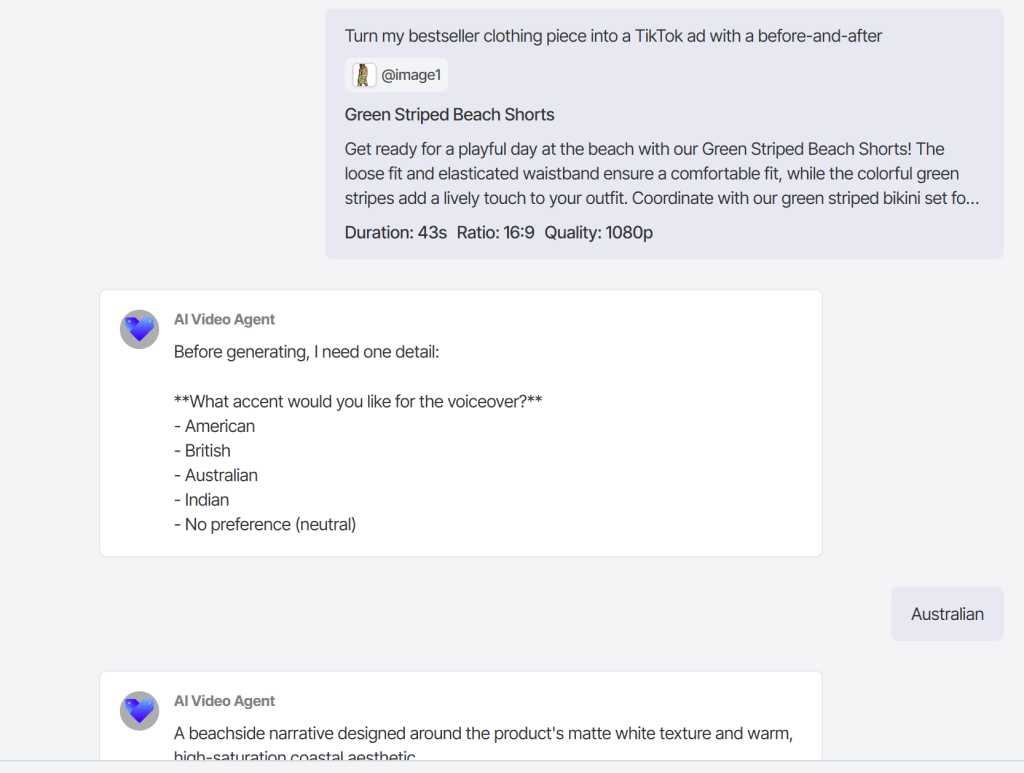
Once it has what it needs, it builds your storyboard, scene by scene, for you to review.
Step 6: Review Your Storyboard, Scene by Scene
This is the part that’s new. Instead of one full video showing up all at once, the Agent lays out the plan first, scene by scene: what each shot is, what it’s saying, and how it leads into the next one. Read through it like a shot list before anything gets made.
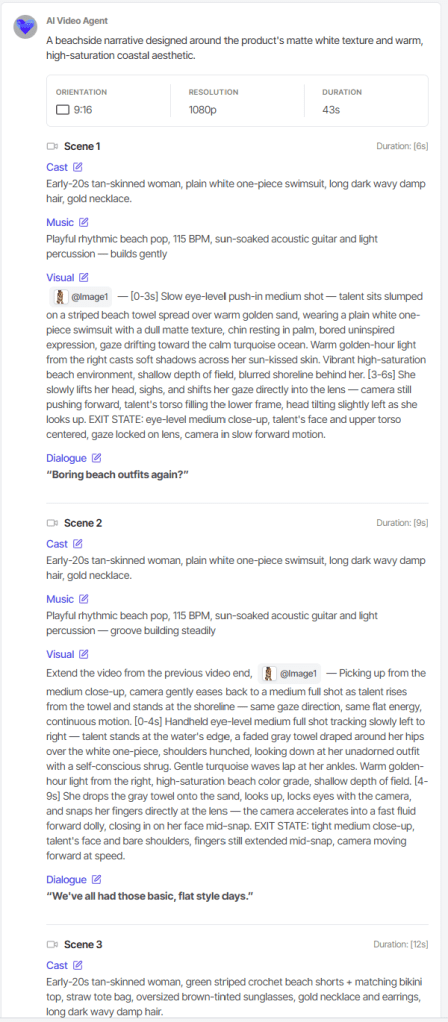
If something’s off, say so, scene by scene. “Make scene 2 punchier” or “cut straight to the product in scene 1, skip the lifestyle shot.” The Agent adjusts that scene without touching the rest of the video.
Step 7: Generate
Once every scene looks right, click on approve storyboard. The Agent builds your video for each scene. Once every scene is good to go from your end, you can click on generate to produce full video.
Step 8: Download and Run It
Your video is ready. Download and publish straight to TikTok, Reels, YouTube Shorts, wherever your audience actually is.
While competitors are still waiting for agency feedback, your campaign can already be generating results.
Why Marketers Love AI Video Agent 2.0
The biggest advantage of AI Video Agent 2.0 is that it transforms video creation from a technical process into a strategic conversation.
Instead of spending time learning editing software, users can focus on communicating ideas and goals. The AI handles much of the execution while keeping users involved in key creative decisions.
This leads to faster production, lower costs, improved creative quality, and greater scalability.
For brands creating dozens of videos each month, these benefits can translate into significant competitive advantages.
Final Thoughts
AI Video Agent 2.0 represents a major leap forward in AI-powered video creation. Rather than simply generating videos from prompts, it actively collaborates with users to understand objectives, build narratives, create storyboards, refine scenes, and produce polished marketing content.
By combining conversational AI, intelligent planning, automated product understanding, storyboard creation, and scene-level editing, Tagshop AI makes professional video production accessible to businesses of all sizes.
As video continues to dominate digital marketing, tools like AI Video Agent 2.0 will play an increasingly important role in helping brands create more content, launch campaigns faster, and achieve better results with less effort. For marketers looking to scale content creation without sacrificing quality, the future has already arrived.


Leave a Reply